


Article:
What is the secret of success for energy retailers?
By Kirstin Crothers
Recent exits suggest electricity retailing is far harder than it appears. RAA is closing RAA Energy in South Australia, with customers expected to transition to 1st Energy by the end of 2026. Ampol also exited electricity retailing, transferring customers to AGL in 2026 after only a few years in the market. Telstra took a retail licence but ultimately decided not to proceed. Each case raises the same question: what separates retailers that build durable businesses from those that retreat?
Customer reach is not operating capability
A large customer base does not automatically translate into a successful retail proposition. RAA could use existing membership, loyalty or convenience to acquire customers more cheaply than conventional retailers, and white-labelling may have appeared to reduce operational risk. (Ampol took the more complex route of building its own fully authorised, independent energy retailing business from scratch.) But acquisition is only one part of the economics. Retailers still need to forecast demand, hedge wholesale exposure, manage network and market charges, run billing and customer-service systems, comply with consumer-protection rules and fund working capital.
When wholesale risk overwhelms the model
The 2022 energy crisis exposed the consequences of getting the risk model wrong. High and volatile wholesale prices, elevated fuel costs and limited access to hedging placed severe pressure on retailers, and a number of businesses failed or withdrew. Enova Energy, Australia’s best-known community retailer, entered voluntary administration after concluding that high wholesale prices and capped customer prices made continued operation impossible.
Some failures are immediate; others are delayed. ZEN Energy’s electricity authorisation was revoked in July 2026 and its retail business entered voluntary administration. The lesson is that a retailer can survive the first shock but remain undercapitalised, overexposed or unable to rebuild its hedge position.
Reform and regulation are reshaping the risk
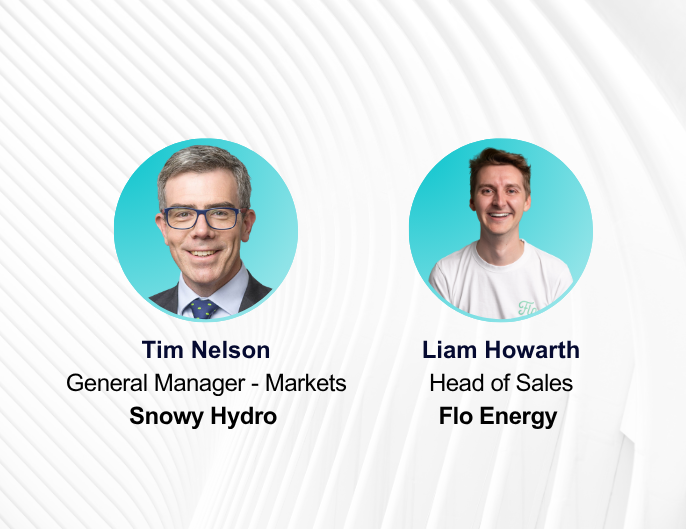
 According to Tim Nelson, General Manager Energy Markets at Snowy Hydro and former Chair of the NEM Review, the reforms respond to a fundamental shift in market risk. “As the NEM becomes increasingly weather dependent, the nature of risk is changing. The NEM Review reforms are designed to ensure that retailers, generators and customers have access to liquid, tradeable contracts that allow them to manage those risks.”
Measures proposed by the review could improve investment signals and contract liquidity. As Nelson explained, this means “developing deeper contract markets across the different services the system needs: bulk energy, shaping to manage when electricity is produced and consumed, and firming to manage periods when weather-dependent generation is unavailable”.
“giving retailers confidence to offer customers competitive products”
For retailers, a deeper contracting toolkit could help manage renewable-era volatility, but it would also raise the premium on forecasting, hedging, customer data, flexible-load management and balance-sheet strength. “A well-functioning contract market is critical,” Nelson said. “It allows risk to be allocated to those best able to manage it, while supporting investment and giving retailers confidence to offer customers competitive products.” Retailers without those capabilities may find the market even harder to navigate.
Default offer doldrums
Retail price regulation adds another layer of complexity. The Default Market Offer and Victorian Default Offer are based on estimated wholesale, network, environmental and retail costs, including an allowance for margin. Even so, annual price determinations limit retailers’ ability to recover forecasting or hedging errors, or to pass through sudden cost increases when wholesale prices move sharply.
Together, these pressures help explain why even large, vertically integrated retailers can struggle. Owning generation provides a hedge, but it does not eliminate exposure to regional price movements, fuel costs, plant availability, transmission constraints, customer service, bad debt or reputational risk.
Where profitable models are emerging
At the same time, there is profit to be made. Flow Power is reportedly being marketed for sale with EBITDA of about $20 million and gross margin of $58 million for the year to 30 June. But it is not a simple residential-retail comparison: its commercial and industrial focus, renewable-development activities and sophisticated customer base may produce a different risk and margin profile.

Although funding is not proof of profitability, investor enthusiasm was evident in Amber Electric’s oversubscribed $78.5 million Series E round, which will help fund its expansion across Europe. Its model is built around real-time pricing, automated battery and EV optimisation, and flexibility. In other words, Amber is attempting to earn value not only from selling kilowatt-hours, but from helping customers respond to wholesale-market conditions.
New players entering the retail market
New entrants are still testing the opportunity. Singapore-based Flo Energy has maintained an Australian presence, while Squadron Energy is pursuing a targeted entry aimed initially at selected commercial and industrial customers. That strategy may be more defensible than residential retail at scale: a generator-retailer with identified C&I customers can align supply, contracts and generation assets while limiting acquisition and service costs.
 “At Flo, we build our platforms in-house rather than relying on third-party providers,” said Flo’s Head of Sales Liam Howarth. “With our dedicated Data, Product, and Tech teams, we’re able to ingest information about a customer’s load, flexibility and consumption patterns before we quote, so we can accurately price, hedge and serve them.
“Removing the need for third parties has also kept our costs down and allowed us to build energy management platforms”
“Removing the need for third parties has also kept our costs down and allowed us to build energy management platforms like the FlowSmart Dashboard for our customers, and Flo Business Pro — our sophisticated progressive purchasing platform.”
So, what is the secret?
The likely dividing line is execution. Retailers fail when they mistake customer reach for capability, treat hedging as a back-office function, underprice operational complexity or lack the capital to withstand one bad market year. They succeed when retail is integrated with a clear source of energy, data or customer value, and when risk management is treated as the product’s foundation rather than its insurance policy.
Tim Nelson, Liam Howarth and other leading energy retail experts will be speaking at Energy Retail Excellence in Sydney this December.