

Article:
Trust starts with data: why energy retailers need a new customer information strategy

By Kirstin Crothers
Energy retailers are being asked to play a larger and more complex role than ever before. As households adopt rooftop solar, batteries, electric vehicles and smart appliances, retailers are increasingly expected to help customers navigate the energy transition, optimise energy use and unlock value from consumer energy resources (CER). But this expanding role depends on something the sector has often struggled to earn: customer trust.
The trust challenge facing energy retailers
That trust challenge is becoming harder to ignore. Recent cyber incidents and regulatory action have highlighted a simple reality: customers will only engage with new energy products and services if they feel confident their personal information is secure, respected and used responsibly.
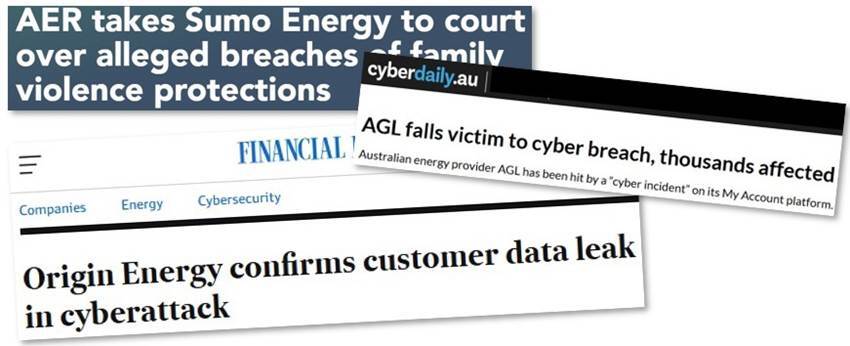
The stakes have risen sharply following the August 2026 cyberattack on Origin Energy, which affected approximately 900,000 current and former customers. Origin later confirmed that around 60 customers had their full bank account numbers accessed, while approximately 100 customers had identification document numbers accessed. The incident prompted widespread customer concern and renewed scrutiny of how energy companies protect sensitive information.
AGL Energy has also disclosed a December 2024 credential stuffing incident affecting its ‘My Account’ platform, where suspicious login attempts enabled unauthorised third parties to access a targeted batch of customer accounts using credentials obtained from unrelated, non-AGL breaches. In affected accounts, the attackers were able to view customer names, addresses and current and past bills; in some cases, they also changed linked email addresses and passwords. The incident underlined how password reuse and digital account security can quickly become a customer trust issue for retailers.
“customer data management is no longer simply an IT issue”
At the same time, the Australian Energy Regulator has commenced legal action against Sumo over a 2024 data breach that allegedly exposed the personal information of 21 customers who may have been affected by family violence. The regulator described the case as the first enforcement action relating to family violence protections under the National Energy Retail Rules. Together, these examples show that customer data management is no longer simply an IT issue; it is now a consumer protection, compliance and trust obligation.
Why customer data is becoming core to the retail model
That shift comes at a particularly challenging moment. The future of energy retail increasingly depends on access to, and intelligent use of, customer data. Managing distributed energy resources requires detailed insights into customer behaviour, household technologies, energy consumption patterns and preferences. The more sophisticated the energy ecosystem becomes, the more information retailers need to deliver valuable, personalised and reliable services.
“information is a huge target for the ransomware actors and relatively easy to steal”
 As Dr Phil Blythe from CAPA Intelligence, an Australian cybersecurity firm specialising in the electricity sector, puts it: “There is a critical inflexion approaching for energy retail businesses in connection with DER, as the entire business model is about aggregating information about customers and using it to streamline and optimise outcomes. Yet this same information is a huge target for the ransomware actors and relatively easy to steal.”
This creates a difficult tension. Many customers remain uncertain about what retailers actually do and how they create value, particularly as tariff structures, solar offers, battery programs and flexibility products become more complex. Customers are producing, storing and managing energy in ways that were unimaginable a decade ago, while many retailers are still working out how to explain these offerings clearly and earn permission to use the data that makes them possible.
Turning transparency into better product design
This is where customer data management becomes inseparable from product design.
Retailers developing products for solar owners, apartment residents, virtual power plant participants and EV drivers need more than secure systems. They need simple, transparent customer propositions. Consumers are more likely to share information when they understand what is being collected, why it is needed, how it benefits them and what protections are in place.
A customer considering a battery optimisation program should be able to quickly understand what data is being collected, who can access it, how the program works and what value they receive in return. The same applies to emerging apartment energy models, smart charging services and AI-enabled energy management products. When the value exchange is unclear, complexity erodes confidence. When it is transparent, data sharing becomes easier to justify.
“questions about consent, control, fairness and transparency”
The challenge will only grow as retailers introduce AI, automation and more personalised customer experiences. These tools may help customers manage energy more efficiently, but they also raise sharper questions about consent, control, fairness and transparency.
As Blythe argues, “Changing the trust equation with consumers may require retailers to change their traditional attitudes towards data and its sovereignty.”
Building trust as a competitive advantage
The lesson from recent events is clear. Trust cannot be rebuilt through cybersecurity alone, although robust security remains essential. Retailers will need a broader approach that combines strong data governance, clear customer communication, privacy-by-design principles and transparent product design.
A new customer information strategy must go beyond collecting and protecting data. It should give customers clear visibility over what information is held, how it is used, what value they receive in exchange, how consent can be managed, and how data protection is built into every product from the start.
Those that treat customer data as both an operational asset and a trust asset will be best positioned to succeed. As retailers evolve from commodity suppliers into energy service providers, the strength of their customer relationships may become just as important as the sophistication of their products.
For energy retailers, the question is no longer whether customer data management matters. The question is whether they can turn security, transparency and trust into a genuine competitive advantage in an increasingly data-driven energy market.
Dr Phil Blythe is joined by a host of energy retailing experts speaking at Energy Retail Excellence this December in Sydney. Learn more.